
I have been reading articles about Soundcloud introducing what they call Fan-powered Royalties. This is a massive change in terms of earning potential for independent artists and labels but in order for this kind of model to roll out across other platforms like TIDAL or Spotify it would be essential for all 3 major labels to be on board and re-licensing something like this would be no small feat.
Current streaming royalties model
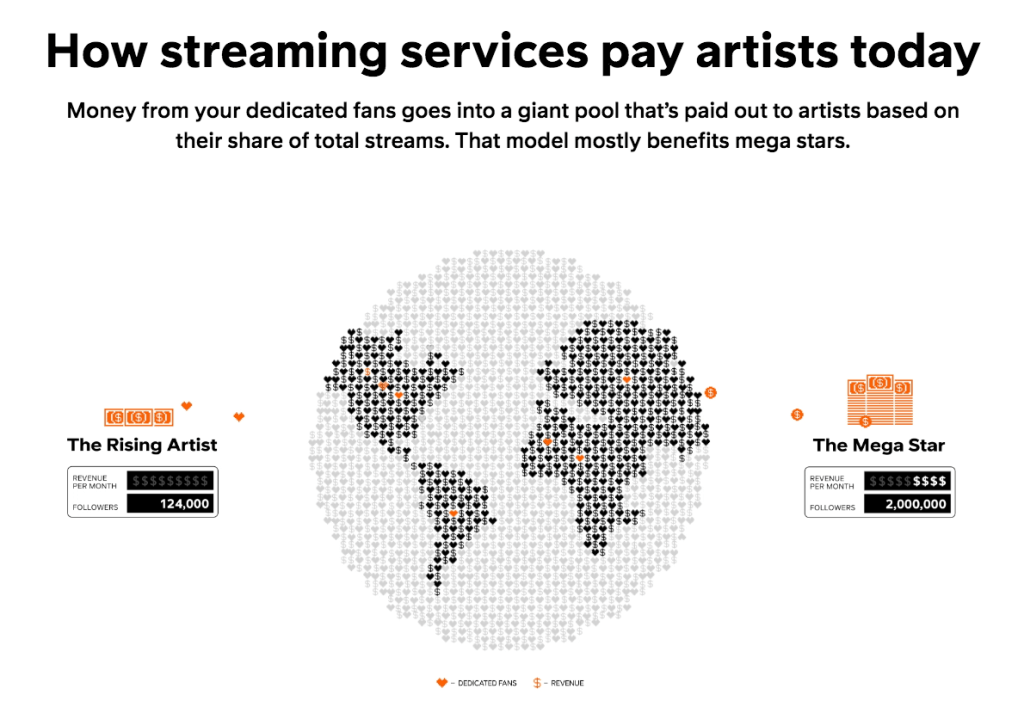
In order to understand the benefits of the new model, we need to understand how the current pro-rata model works. For the sake of us all understanding the model I am going to keep the numbers small and remove all VAT or taxes etc.
If a streaming service has 100 paying subscribers for a particular month who are all paying R50/month for their subscription, there will be a total of R5 000 which will need to be shared among all parties involved. These parties includes the streaming service itself, the rights collection agency and the artists and labels who have their music on the service.
The total of R5 000 would then be split up into percentages and although all agreements may vary, generally 50 to 70 percent of that total goes to what is called a label pool. The label pool is what gets paid to the labels and artists based on your amount of plays for that particular month. For this example lets say 50% makes up the label pool, that means that R2 500 will be split between all labels on the service that received plays. If there were 100 plays across all the labels on the service and you got 10 of those plays, you would make 10% of the R2 500 (R250).
The balance of the monthly total then gets put aside to pay the rights organisations like CAPASSO who have negotiated a percentage of that on your behalf. The rest then goes to the service to cover their costs such as marketing, development, staff salaries, etc.
In the current model it is clear that if you generate more plays over the particular month you will earn more of the revenue in the label pool. This model obviously favours major artists like Cardi B or Chris Brown as they rack up thousands of plays. The smaller artists like us then receive peanuts as we do 100 plays for the month which is only a small percentage of the total plays which could be in the hundreds of thousands. In addition to this, the majority of the subscription revenue that is paid by our fans who only listen to our music is also then paid out to these major artists even though they did not stream a single song from them.
The new streaming royalties model
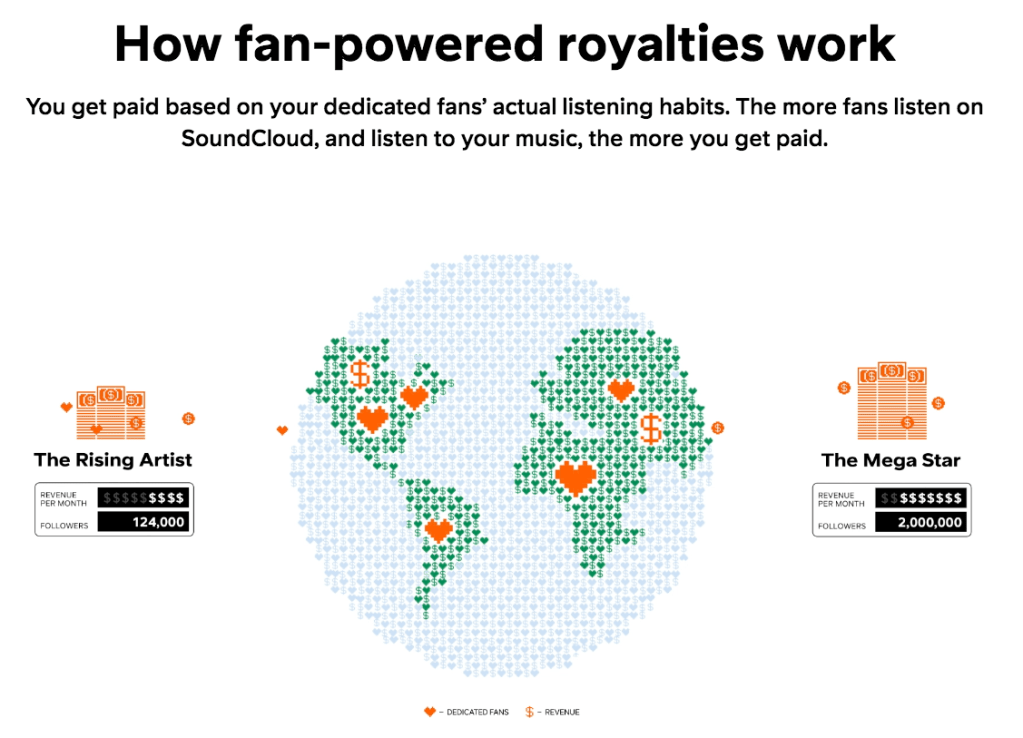
Lets take the same example as we used above with 100 subscribers paying R50/month. Now, instead of taking 50% of each subscribers payment and putting it into a massive pool to be split among all labels that received plays. Each subscribers 50% will be spit only among the labels or artists that they have actually played. In other words, the subscribers fee will only go to those artists that they have supported through the month.
How this will translate into payments to the rights organisation I do not know, but I speculate that the standard model would still apply unless they have also opted to do this sort of per subscriber micro breakdown.
Conclusion
I reached out to a major label and a streaming service to get their comment on this new model but sadly they were not able to comment ‘on the record’ but what they did say is that although this looks good on paper, practically this won’t make much of a difference to the artists earnings.
Personally I think this is an excellent development that will see streaming services level the playing field when it comes to revenue splits. In the old physical CD days when someone purchased a CD you knew that when a person bought your CD they were supporting your music, a portion of their purchase didn’t go to all the other featured music in the store, so why should this new way of consuming music be any different?




 FIND MUSIC
Leave a comment